



















How do zoning and development codes affect wildlife?
–—B.L, via email
Suburban and urban developments continue to push outward into natural landscapes, raising critical questions: How do our zoning laws and development codes impact wildlife? Not just mere paperwork, land-use planning is the foundation on which regional biodiversity either survives or collapses.
Instead of relying solely on sprawling subdivision designs that fragment natural habitat, many planners are turning to smart zoning tools, environmental overlay districts and preservation regulations.
One of the most distinctions is how local authorities enforce their goals. Municipalities typically rely on master plans as guiding visions, but development codes provide the legal rules. As Michigan State U. Extension researchers explain in their guidelines, “...local governments utilize plans as guiding documents and zoning as the legally enforceable component.” When communities integrate ecosystem services into these frameworks, they create structured protections for local wildlife.
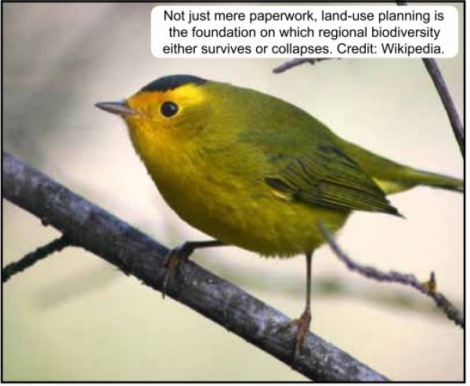
The physical design of a community has a profound, measurable effect on animal populations. A comprehensive, decade-long study tracking wildlife dynamics in the Puget Sound lowlands demonstrated that sensitive species, such as the Wilson’s warbler and Swainson’s thrush, are acutely affected by how residential and commercial layouts are built.
Rather than treating all construction as entirely destructive, researchers found that preserving native vegetation and tree cover between homes drastically changes animal survival rates. Commenting on these long-term trends, senior author John Marzluff, a professor emeritus of environmental and forest sciences at the University of Washington, noted in a university report on the findings: “This work shows that birds care how land is developed, which gives developers a choice during the planning process. There are trade-offs between developments designed for humans and those designed with the ecosystem in mind, but balancing the two can benefit both.”
To achieve this balance, modern municipal codes use specific regulatory tools.
Environmental ordinances, wetlands protections, stormwater management and riparian buffer requirements help shield critical corridors from disruptive construction. And site-plan reviews, overlay districts and large-lot preservations let local planners to prevent severe habitat fragmentation. For example, large-lot zoning in rural areas helps maintain continuous tracts of unfragmented forest and open space, giving wide-ranging mammals and forest-dwelling birds the room they need. Ultimately, zoning codes are powerful. When thoughtfully crafted, they bridge the gap between human infrastructure growth and the protection of vulnerable species, ensuring that community expansion does not come at the absolute expense of local wildlife.
CONTACTS: Land-Use Planning for Wildlife, takingactionforwildlife.org/blog/2024/10/land-useplanning-wildlife; Municipal Codes for Minimal Development Impacts: “Still Kind of a Mystery,” https://www.epa.gov/snep/municipalcodes-minimal-development-impacts-still-kind-mystery.. EarthTalk® is produced by Roddy Scheer and Doug Moss for the 501 (c)(3) nonprofit EarthTalk. See more at https://emagazine.com. To donate, visit https://earthtalk.org. Send questions to: question@earthtalk.org.